
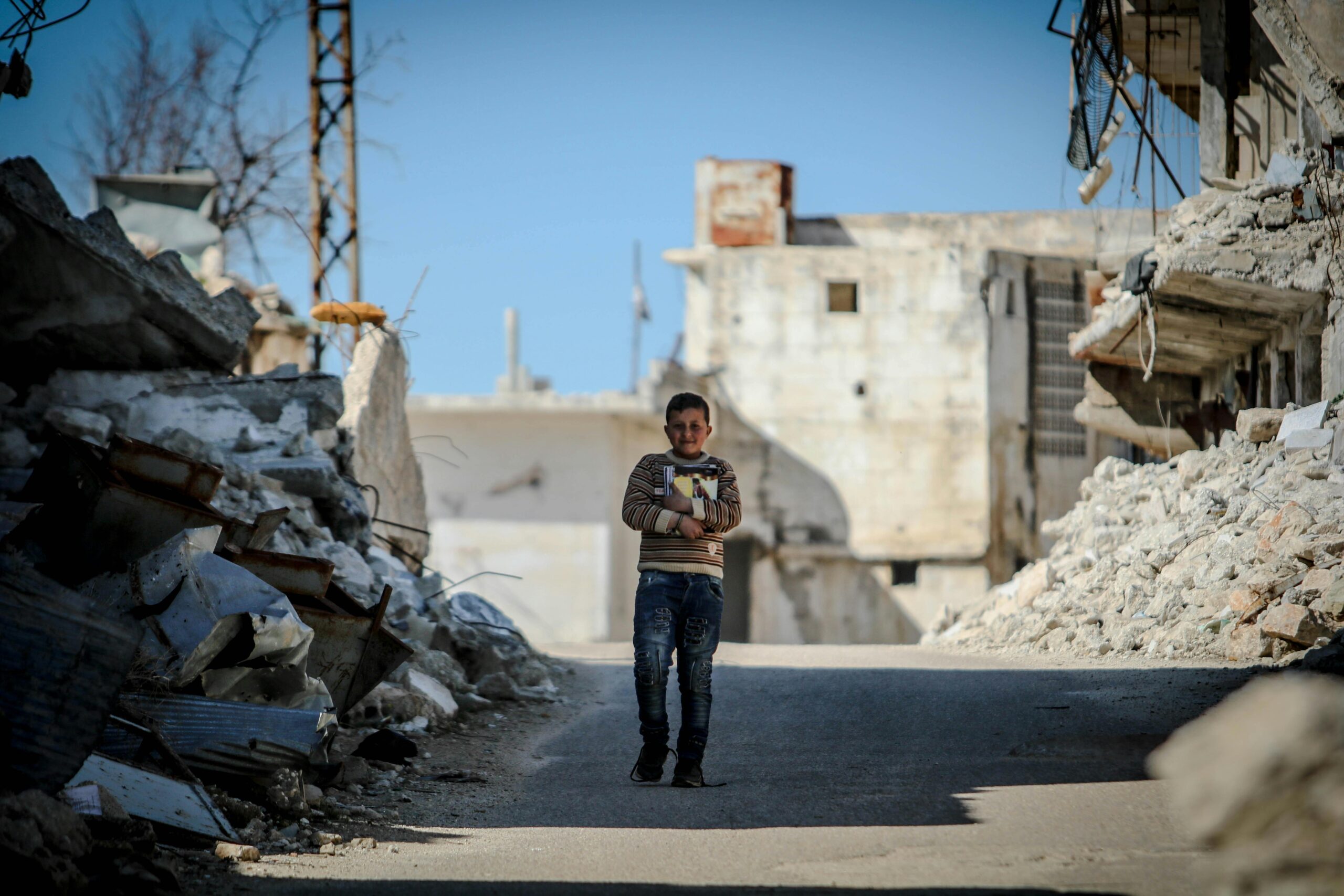
This initiative is part of a major international effort to stabilize the “New Syria” following the fall of the Assad regime in late 2024. In the current 2026 landscape, “remnants” refers to two critical categories: chemical weapons residues and explosive remnants of war (ERW) like landmines and IEDs. | Photo by Ahmed akacha
Ankara’s role is central to this through the “Joint Training and Consultancy Memorandum of Understanding” signed in August 2025 and the newly launched “Breath of Freedom Task Force” (March 2026).
1. Eliminating Chemical Remnants
Ankara recently joined an international task force—alongside the US, UK, France, Germany, Qatar, and Canada—specifically to secure and destroy chemical weapon remnants left behind by the previous regime.
- The Mechanism: Under the guidance of the OPCW (Organization for the Prohibition of Chemical Weapons), the Syrian government established the “Breath of Freedom” initiative.
- How it works: Ankara hosted specialized workshops (most recently in February 2026) to assess “capacity gaps.” Turkish experts provide technical support and training to Syrian teams on safe reconnaissance, containment, and on-site destruction of residues where safe storage isn’t an option.
- Health Infrastructure: A unique part of this training includes strengthening Syria’s medical resilience to handle chemical risks during the cleanup process.
2. Clearing Explosive Remnants (Mines & IEDs)
Years of conflict left Syria one of the most contaminated countries in the world. Ankara is leading the effort to train the new Syrian army to clear these paths for reconstruction.
- The Barracks Program: As of late 2025 and early 2026, Syrian soldiers are being trained directly in Turkish military barracks. This includes specialized courses in military engineering and mine clearance.
- In-Country Experts: Turkey has deployed military attachés and technical experts to Syria to oversee clearing operations in high-risk zones, such as the Tishrin Dam and the outskirts of Kobani, where IEDs have previously stalled humanitarian progress.
- Equipment Transfer: The training isn’t just “how-to”; it includes the provision of Turkish-made demining equipment and Mine-Resistant Ambush Protected (MRAP) vehicles to ensure the safety of the disposal teams.
3. Structural Integration
The training is a “train-the-trainer” model designed to build a professional, centralized Syrian army (targeted to reach 200,000 personnel within five years).
- Academies: Dozens of Syrian students are currently enrolled in Turkish War Academies (Land, Naval, and Air) to bring professional standards back to the Syrian chain of command.
- Standardization: Ankara is helping Syria adopt a unified methodology for mapping and surveying contaminated areas, moving away from the “unprofessional” or “decentralized” methods used by various factions during the civil war.